
Prayer
Prayer
At Holy Family, prayer is at the very heart of school life. Rooted in our Catholic faith, prayer shapes not only our worship but our relationships, attitudes and daily actions. Through four dedicated moments of prayer each day, we help our children grow in faith, gratitude and reflection.
Each morning begins with prayer, placing the day in God’s hands and inviting His guidance into our learning, friendships and choices. This sets a calm, reflective tone and reminds our pupils that they are part of a loving community centred on Christ.
Before lunch, we pause again to prepare our hearts. This short prayer creates a moment of stillness in the busyness of the day, encouraging mindfulness and respect for the food and fellowship we are about to share. After lunch, we gather our thoughts once more to say thank you — recognising the many blessings we receive and nurturing a spirit of gratitude.
Finally, at home time, we end the school day in prayer. This allows children to reflect on what they have learnt, ask forgiveness where needed, give thanks for successes, and seek God’s protection as they return to their families.
Prayer at Holy Family also reflects the rhythm of the Church’s liturgical year. During Advent, our prayers focus on hope, preparation and joyful expectation as we await the coming of Christ. In Lent, we pray more deeply about repentance, sacrifice and compassion, often including additional reflections, scripture and opportunities for quiet contemplation. These seasonal prayers help children understand that faith is lived and experienced throughout the year.
Religious Education Directory
To love you more dearly
Prayer and collective worship are at the heart of our school community. They give us time to come together, reflect on God’s love, listen to His Word and give thanks for the many blessings in our lives. Through prayer, we grow in faith, learn to care for one another and strengthen our relationship with God.
We use the ‘To Love You More Dearly’ Directory to support and guide our prayer and collective worship throughout the school year. It helps us to celebrate the richness of our Catholic faith through Scripture, prayer, reflection and opportunities to come together as a community. We encourage every child to pray with an open heart and to recognise God’s love in themselves, in others and in the world around them.
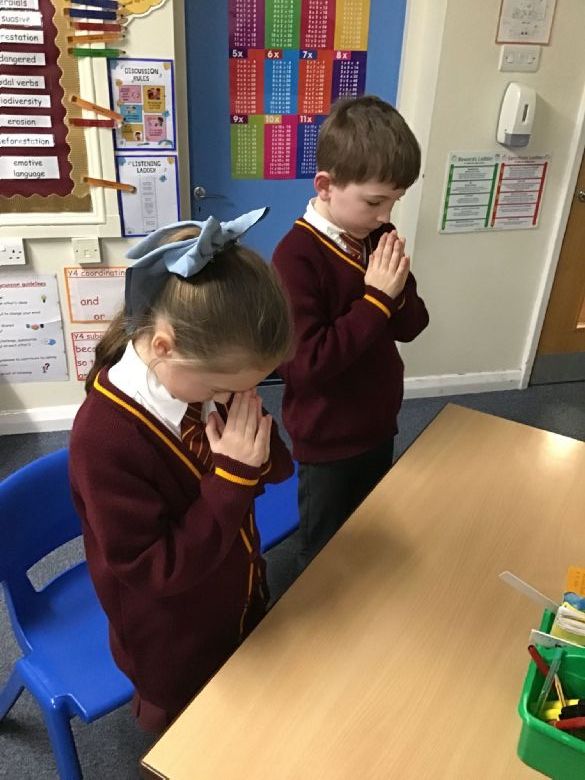
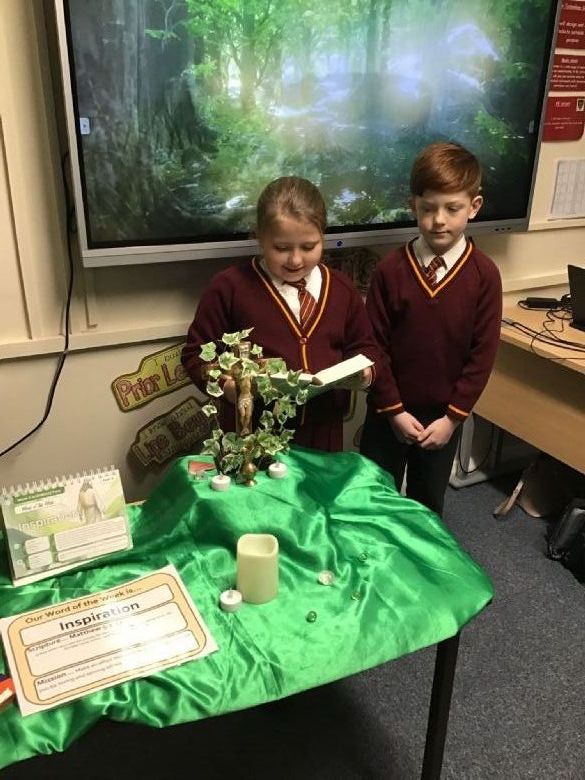
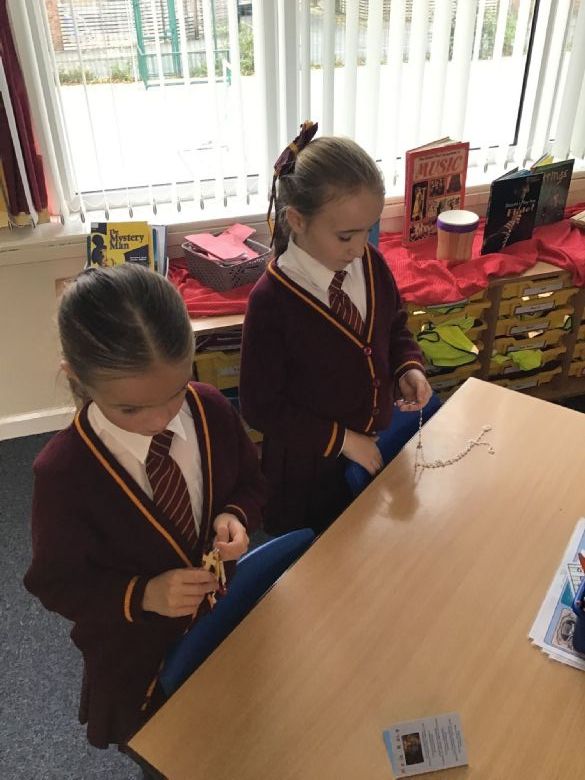
We carefully differentiate prayer to support children at every stage of their spiritual journey. In Key Stage 2, pupils pray the traditional Morning Prayer of the Church, learning the words and structure that connect them to Catholics around the world. In Upper Key Stage 2, children are encouraged to engage more deeply — reflecting on scripture, writing their own intercessions, and exploring the meaning behind the prayers they say. This gradual deepening helps them move from simply reciting prayer to truly understanding and living it.
Through daily prayer and seasonal reflection, Holy Family nurtures children who are thoughtful, compassionate and spiritually aware — young people who understand that prayer is not just something we say, but a way we live.
"14 This is the confidence we have in approaching God: that if we ask anything according to his will, he hears us. 15 And if we know that he hears us—whatever we ask—we know that we have what we asked of him."
1 John 5:14-15


Our Daily Prayers


At our school, children are taught traditional Catholic prayers which start with the Sign of the Cross. These prayers include the Our Father, Hail Mary and the Glory Be. Whether we are celebrating or asking for help, we understand how to connect with God.


Children are invited to visit the chapel in school and spend valuable time expressing themselves through prayer and talk with the Chaplaincy team.
At Holy Family, we also have a Chaplaincy prayer group who meet every Thursday lunchtime in the Chapel.
The school has a prayer garden which can be used for prayer, quiet reflection and small group or whole class prayer liturgies.
The children are also encouraged to take part in creative prayer with their peers, thanking God for all they have received or asking for guidance on daily matters or current affairs. We provide the opportunity to do this as a group or individually using our classroom 'Prayer Chairs'.


Prayer Provision
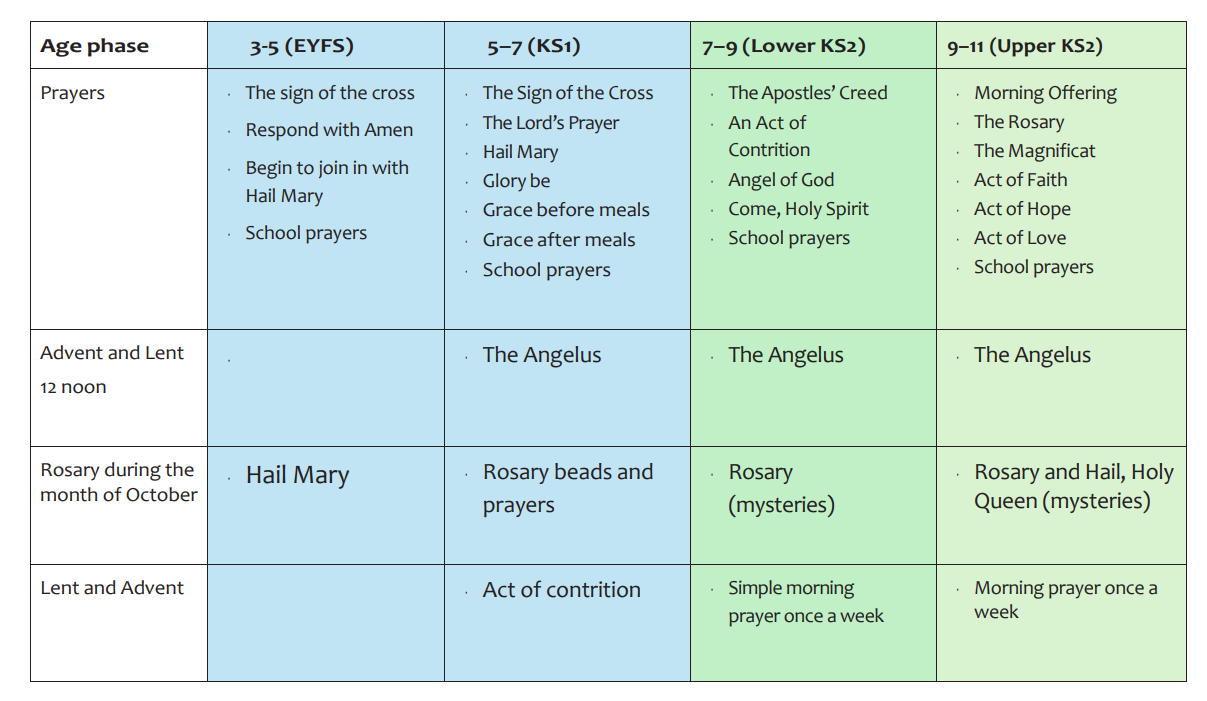
Below shows the prayer structure at Holy Family, outlining our four daily prayer moments, the seasonal focus during the liturgical year, and the progression of prayer across each key stage.
Planning Prayer and Liturgies in Class
At Holy Family, prayer and liturgy are carefully planned as a central part of our Religious Education provision. Collective Worship is rooted in Scripture, linked to the liturgical year, and responsive to the spiritual needs and maturity of each class.
Class prayer and liturgy follow a clear structure — Gather, Listen, Respond, Go Forth — ensuring that worship is purposeful, reflective and age-appropriate. Teachers plan opportunities for Scripture reading, silence, discussion, intercessions and symbolic actions, enabling pupils to participate actively rather than simply observe.
Prayer themes are drawn from:
-
The Word of the Week following Monday’s Gospel assembly
-
The liturgical seasons (e.g. Advent, Lent, Easter)
-
Catholic Social Teaching and whole-school virtues
-
Current RE units of study
Provision is differentiated across key stages. Younger pupils are guided through simple, structured prayers with visual symbols and repetitive responses. In Key Stage 2, children take increasing responsibility for preparing elements of worship, including writing prayers and selecting Scripture. In Upper Key Stage 2, pupils plan and lead prayer and liturgy more independently, demonstrating deeper theological understanding and reflective response.
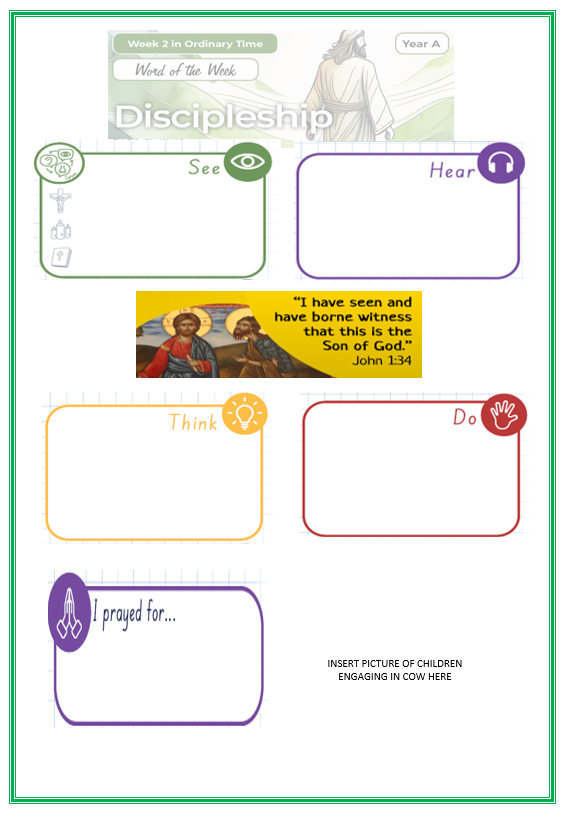
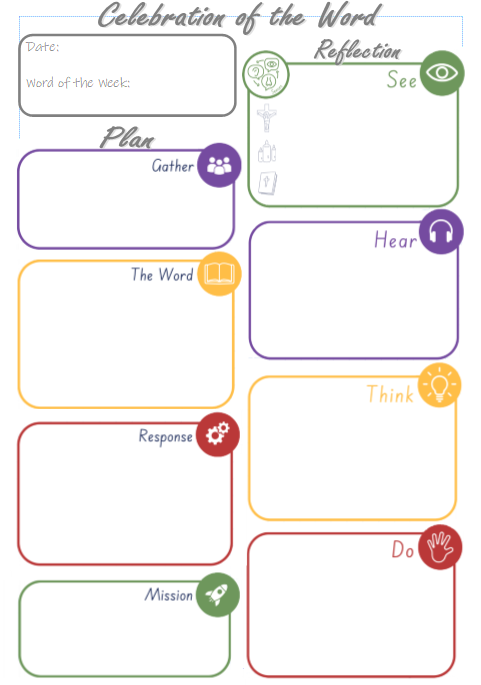
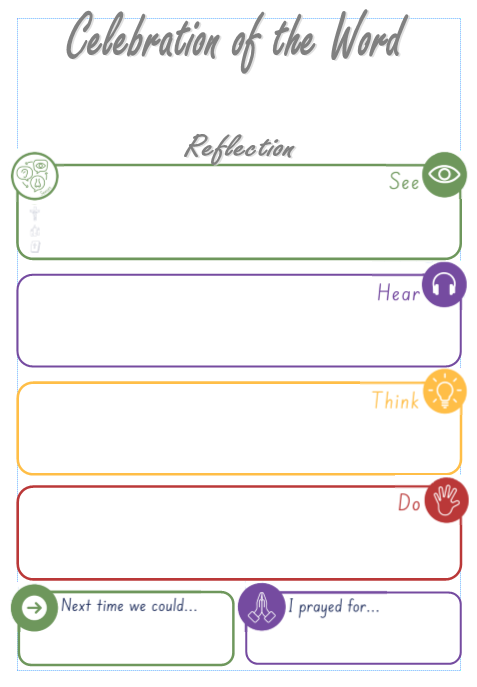
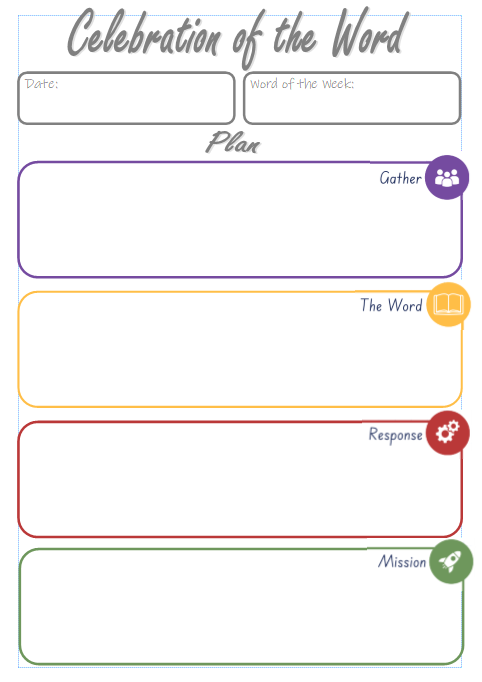
Examples of planning sheets for EYFS, KS1 and KS2.
Word of the week
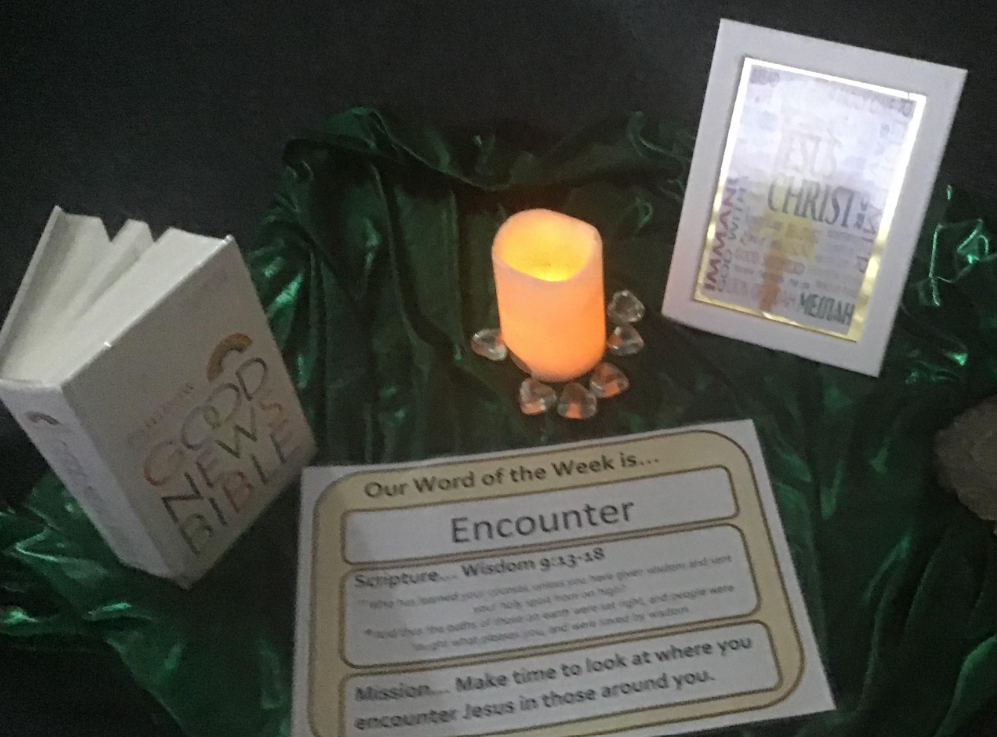
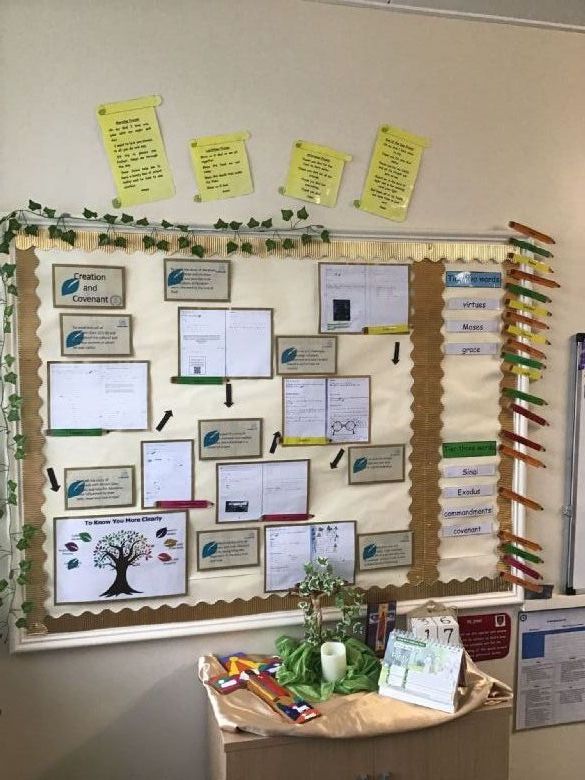
Each week, following Monday’s Gospel assembly, pupils are invited to live out the message of the Gospel through our Word of the Week. Children who demonstrate this virtue in their actions, attitudes and relationships are recognised with a Virtue Certificate. This celebration encourages our pupils to put faith into action and to actively live out Gospel values in their daily lives. The Word of the Week is displayed in each classroom and children annotate them, following class or Key stage Celebrations of the Word.
Our Prayer Bear
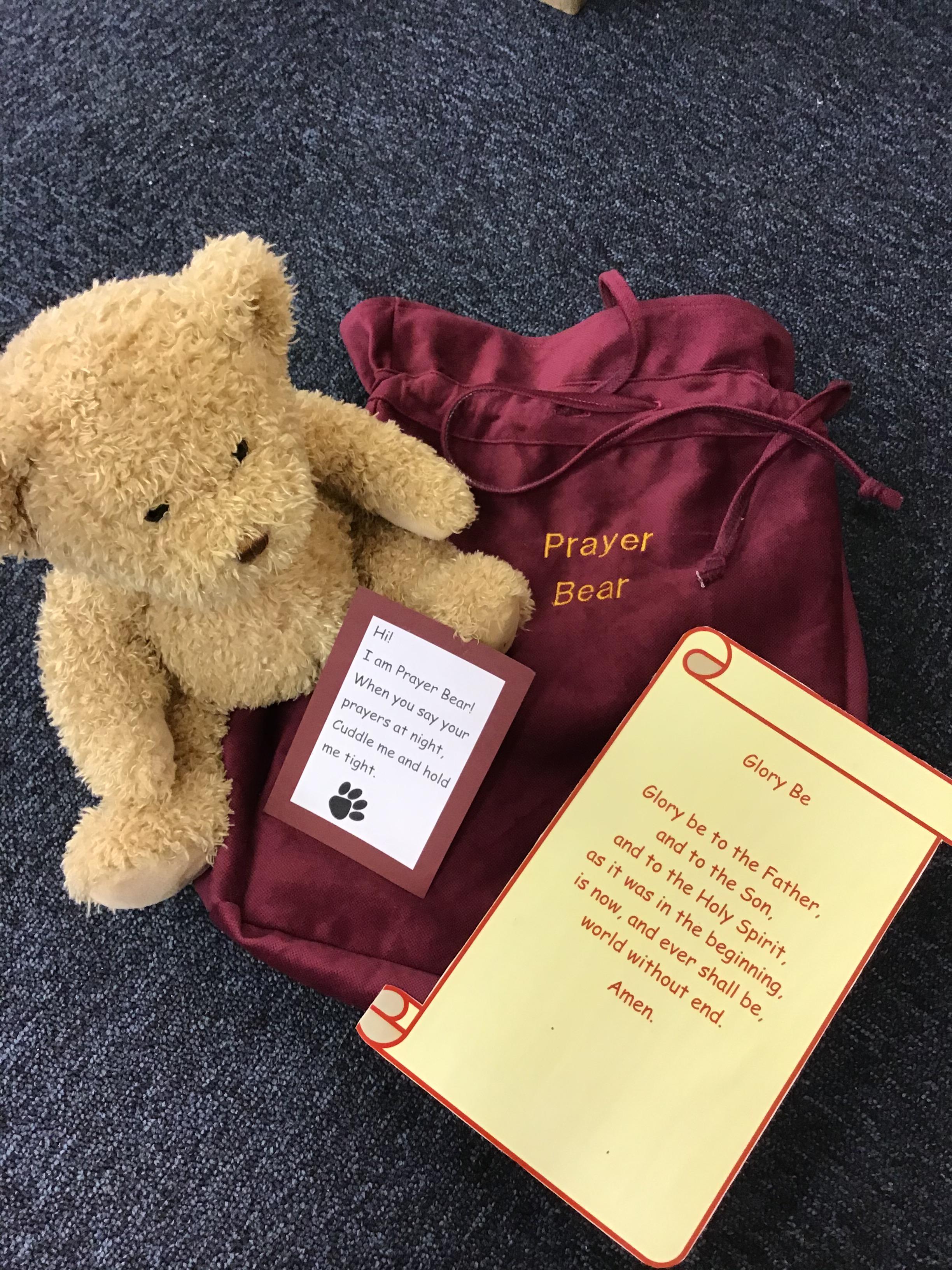
As part of our commitment to the ongoing spiritual development of our pupils we are supporting the children at Holy Family to continue to spread the word of God by praying at home with their families. The children in Nursery, Reception and Year 1 have the opportunity to take home the class 'Prayer Bear' to learn our school prayers with their parents and carers and worship together.
Our Prayer Bear